Install Free Date Time Clock Widget and Tool!
Just press copy button and paste into your blog or website.
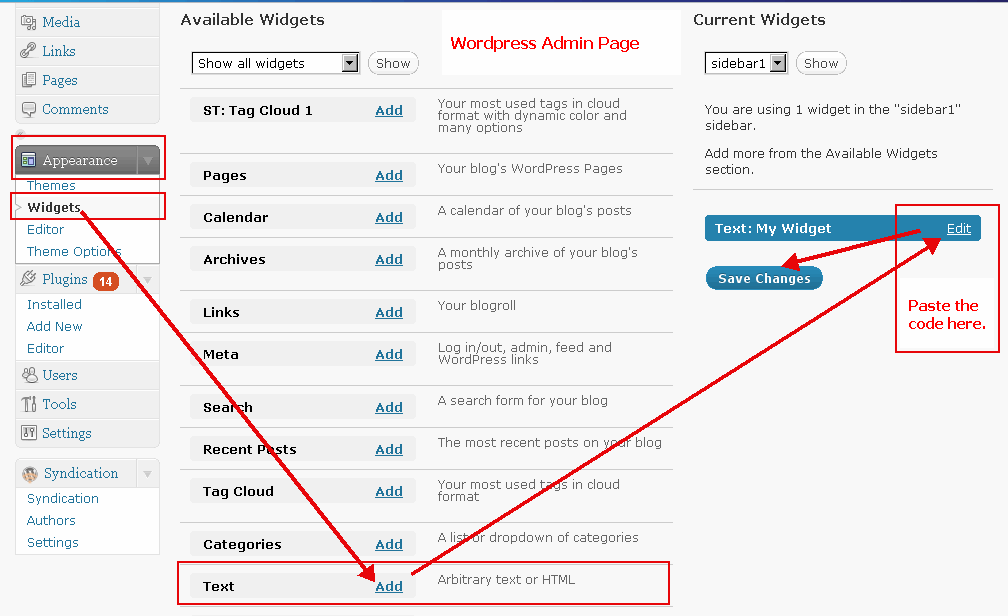
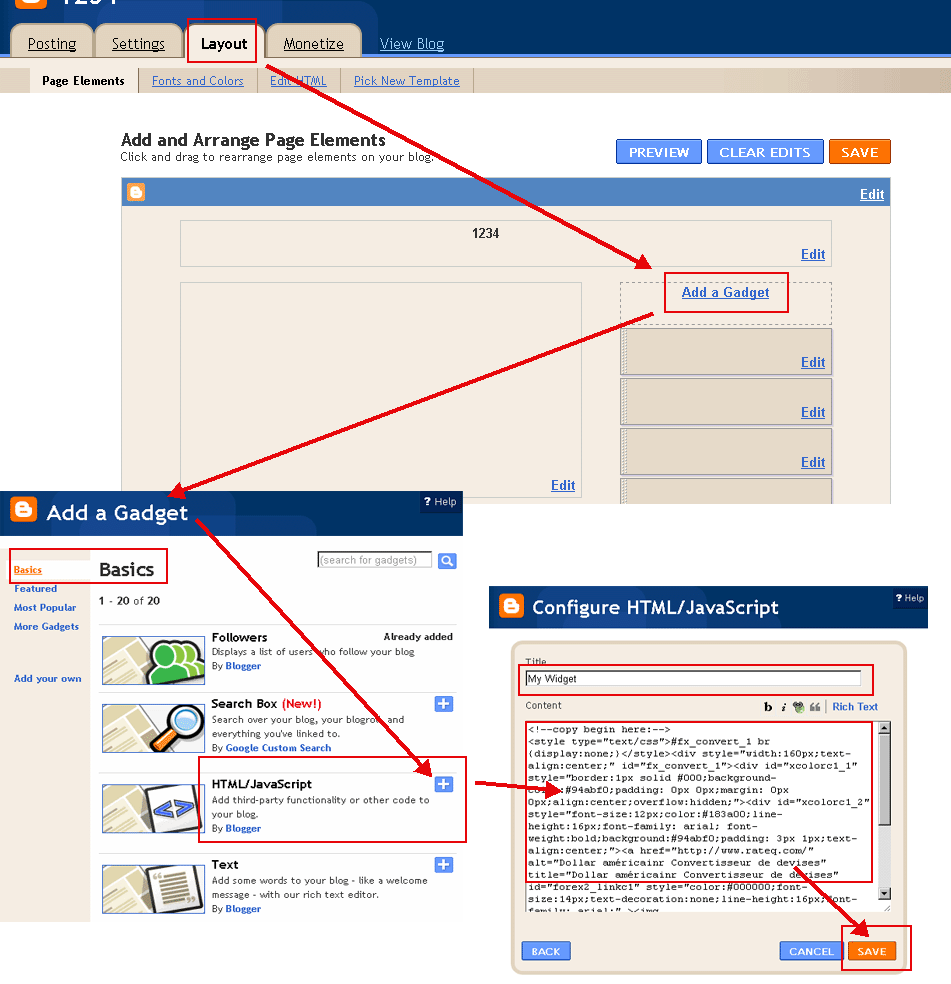
(Please switch to 'HTML' mode when posting into your blog. Examples: WordPress Example, Blogger Example)
Djibouti - Wikipedia Djibouti is a multi-ethnic nation with a population of 1,066,809 at the census held on 20 May 2024 [7] (the smallest in mainland Africa) French and Arabic are its two official languages; Afar and Somali are national languages
Djibouti City - Wikipedia It is located in the coastal Djibouti Region on the Gulf of Tadjoura Djibouti has a population of around 780,000 inhabitants [2][3] , which counts for 73% of the country's population The settlement was founded in 1888 by the French, on land leased from the ruling Somali and Afar Sultans
Djibouti Maps Facts - World Atlas Djibouti, located in the Horn of Africa, shares its borders with Eritrea to the north, Ethiopia to the west and south, and Somalia to the southeast Its eastern boundary is formed by the Red Sea and the Gulf of Aden
Djibouti - United States Department of State Deputy Secretary Landau’s Travel to Egypt, Ethiopia, Kenya, and Djibouti Inaugural U S -Africa Technical and Regulatory Space Training Meeting More Than $93 Million in Emergency Nutrition Assistance for 13 Countries
 Calendar